Quick answer
Wear layered, flexible clothing with a moisture-wicking base, insulating mid-layer, and windproof outer shell. Sturdy ankle-supporting footwear with grip is required for alpine launch sites. Avoid cotton, loose scarves, and dangling accessories. Summer flights need sun protection and light layers; winter requires insulated gloves, a warm hat under the helmet, and thermal base layers. Temperature drops approximately 6°C per 1,000 meters of altitude gain.
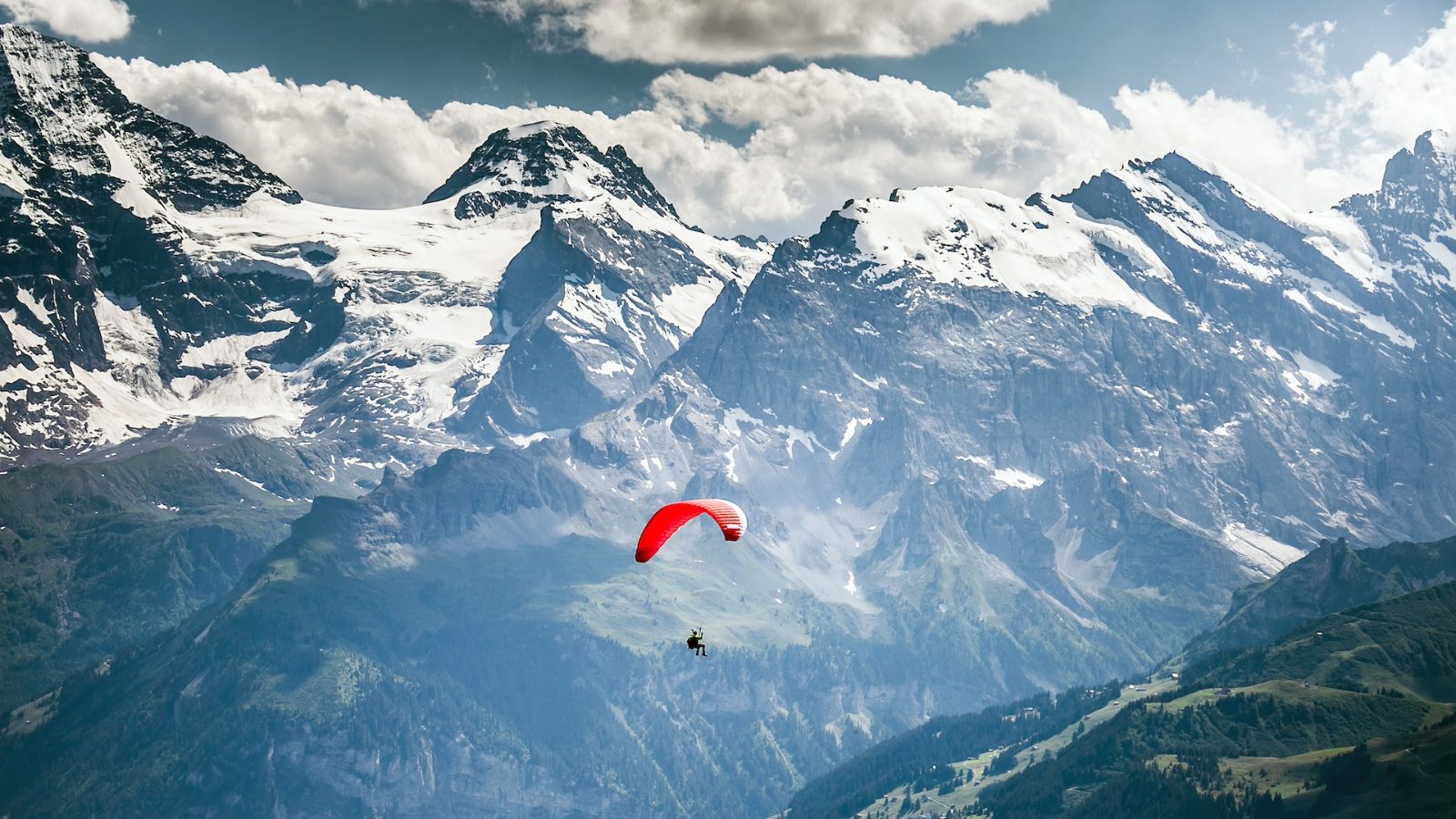
Wind speed at 2,000 meters above the Lauterbrunnen Valley can be triple the ground measurement, and the temperature differential between launch meadow and flight altitude routinely exceeds 15°C. These alpine physics govern what works and what fails when choosing your paragliding outfit for Switzerland. The Swiss Alps present a clothing challenge distinct from coastal or low-altitude flying zones. Launch sites between 1,500 and 3,000 meters mean you begin in one microclimate and fly through several others. A tandem flight departing Interlaken at midday in July will pass through warm thermals near the valley floor, then encounter cooler air masses as the canopy climbs toward the Eiger north face. Your clothing system must accommodate this vertical transit without restricting harness fit or creating snag hazards during launch sequences. Operators emphasize the three-layer principle: a synthetic or merino base that moves moisture away from skin, a fleece or light down mid-layer for insulation, and a windproof shell that blocks convective heat loss at altitude. Cotton absorbs perspiration during the uphill approach to launch zones and stays wet, accelerating heat loss once airborne—a liability in alpine conditions where cloud shadow can drop perceived temperature by 10°C in seconds. Footwear determines launch safety on the steep, uneven terrain common to Swiss paragliding sites. Ankle support prevents rolling during the critical acceleration phase, and aggressive tread grips the mix of grass, rock, and dirt that characterizes alpine meadows. Trail runners fail in wet morning dew; approach shoes or light hiking boots provide the necessary traction and stability. Hands require protection from brake line friction and cold—thin gloves that preserve tactile feedback work for summer; insulated options become necessary as the season moves toward autumn. Sunglasses must be secured with a retention strap, and any hat worn under the helmet should be low-profile to avoid pressure points. Loose scarves, jewelry, and anything that can tangle in lines or harness buckles must be left behind. What to wear paragliding in Switzerland ultimately comes down to alpine-ready layering and terrain-appropriate footwear that together address the altitude, wind exposure, and launch conditions defining Swiss flight zones.
“Temperature drops approximately 6°C per 1,000 meters of altitude gain, and Swiss launch sites routinely sit between 1,500 and 3,000 meters.”
Essential Gear: What To Wear Paragliding In Switzerland
Proper layering and wind-resistant gear are essential for safe, comfortable flights in the Swiss Alps.
-
Book your tandem flight in advance — Operators require reservations and slots fill quickly during peak season.
-
Wear layers with a wind-resistant outer shell — Temperatures drop 6–10°C per 1,000 m of altitude; wind chill intensifies at flight altitude.
-
Choose sturdy ankle-supporting hiking boots — Takeoff and landing sites are often on uneven Alpine terrain requiring stable footwear.
-
Bring sunglasses with UV protection and a retention strap — High-altitude UV exposure is significantly stronger; loose glasses can fall during flight.
-
Wear long sleeves and full-length trousers — Exposed skin is vulnerable to sunburn and wind abrasion during extended flight time.
-
Secure all loose items in zipped pockets — Strong winds and open harness positions can pull away unsecured phones, hats, or accessories.
-
Arrive at the launch site by 09:00–16:00 — Optimal thermal conditions and visibility occur within this window for safe paragliding.
Seasonal Considerations For What To Wear Paragliding In Switzerland
The best arrival window for paragliding in the Swiss Alps is 09:00–16:00, when thermal conditions and visibility are most favorable. Your clothing choices must adapt to these hours, as temperatures drop significantly at higher altitudes and vary by season.
Spring (April-May)
Moderate crowds5°C to 15°C; unpredictable alpine weather. Layers are required as conditions change quickly between valley and peak.
Summer (June-August)
High tourist density15°C to 25°C; stable thermal lift. Light, windproof layers are necessary to combat high-altitude wind chill.
Autumn (September-October)
Moderate to low crowds5°C to 15°C; clear, stable air. Heavier insulation is recommended for flights during the cooler morning or late afternoon periods.
Winter (November-March)
Lower tourist activityBelow 0°C to 5°C; cold, crisp air. Full winter gear is essential to maintain body heat against freezing wind speeds.
Verdict: The most favorable conditions occur within the 09:00–16:00 arrival window during the stable, clear days of September and October.
Safety Standards: What To Wear Paragliding In Switzerland
Alpine paragliding demands strict adherence to clothing safety protocols. Loose items and improper footwear create entanglement hazards that compromise both your safety and the pilot's control.
Do
- Wear closed-toe, ankle-supporting shoes with grip for mountain terrain
- Secure all loose clothing with zips or tucks before launch
- Tie back long hair and remove dangling accessories
- Wear layers you can adjust without removing during flight
- Keep pockets zipped or empty to prevent items falling
Don't
- Wear open-toed sandals, flip-flops, or shoes with trailing laces
- Leave scarves, shawls, or loose jackets unsecured during flight
- Wear wide-brimmed hats or items that catch wind
- Bring loose accessories like dangling earrings or untied belts
- Ignore the pilot's pre-flight clothing and gear safety check
Getting To The Launch Site In The Swiss Alps
Launch sites are located throughout the Swiss Alps, typically accessed via mountain railways or cable cars from major valley hubs. Planning your ascent requires coordinating with local transport networks to reach higher altitudes where launch zones are situated.
SBB CFF FFS network to Interlaken Ost or Lauterbrunnen
Mountain lift to launch point (e.g., Grindelwald First)
Walk from cable car station to designated takeoff area
Check availability
Frequently asked questions about what to wear paragliding in Switzerland
Everything you need to know about what to wear paragliding in switzerland