Quick answer
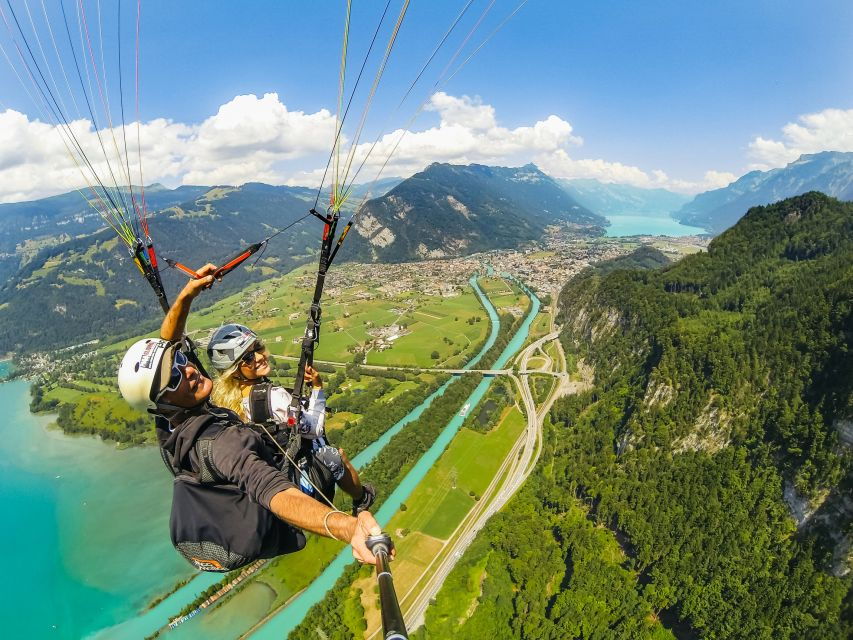
The paragliding in switzerland weight limit for tandem passengers typically ranges from 30 kg minimum to 120 kg maximum, with most operators in Interlaken using a combined pilot-passenger ceiling of 200 to 220 kg. Children under 30 kg may fly with specialized lightweight pilots, while passengers above 100 kg require advance confirmation and specific equipment. Pilots themselves must meet certification weight ranges that vary by wing model and thermal conditions.
Tandem paragliding wings are certified to carry a total suspended mass that includes pilot, passenger, harness, and reserve parachute. A typical EN-certified tandem wing rated for 200 kg combined load leaves roughly 100 to 120 kg available for the passenger once the pilot's weight, dual harness, and safety systems are accounted for. Operators in the Swiss Alps fly with margins that shrink in strong thermal conditions or high-altitude launches, which is why advance disclosure of passenger weight is standard practice. Harness sizing plays an equal role. Tandem harnesses are manufactured in small, medium, large, and extra-large configurations, each with a certified weight range and leg-loop geometry. A passenger at the upper end of the scale may require a reinforced harness and a larger wing surface area to maintain safe wing loading and stable inflation. Conversely, children and lighter adults fly with smaller wings that respond more quickly to thermal lift and require less pilot input during launch. Pilots themselves are subject to weight certification limits tied to their wing model and flight school endorsements. A commercial tandem pilot in Interlaken typically weighs between 70 and 90 kg and selects wing sizes that keep the total system within the manufacturer's recommended range. When passenger weight exceeds 100 kg, the pilot may switch to a larger canopy or decline the flight if weather and thermal intensity reduce the safety envelope. Combined load calculations also account for equipment carried aloft, including cameras, communication radios, and backup instruments. The regulatory framework for tandem paragliding in Switzerland is governed by the Swiss Federal Office of Civil Aviation, which mandates that all commercial flights use certified equipment and that pilots hold valid tandem endorsements. Weight limit enforcement is the operator's responsibility, and most require passengers to confirm their weight during booking and again at check-in. Misreporting weight compromises wing performance and can lead to launch refusal or flight cancellation without refund.
“A typical EN-certified tandem wing rated for 200 kg combined load leaves roughly 100 to 120 kg available for the passenger once pilot weight and safety systems are accounted for.”
Optimal Timing and the Paragliding in Switzerland Weight Limit
The best arrival window for tandem flights is 08:00–19:00, when thermal conditions remain stable and predictable. Pilots manage weight limits more effectively during these hours by utilizing consistent air currents for takeoff and landing.
Early Morning
Minimal congestionCooler, stable air, 10-15°C
Lower thermal activity allows for precise weight distribution and easier glider handling during launch.
Midday
Peak visitor densityStronger thermals, 20-25°C
Rising air currents are significant; pilots prioritize weight balance to ensure maximum safety for heavier passengers.
Late Afternoon
Moderate densityDeclining winds, 15-20°C
Calmer conditions prevail, often providing the most stable window for tandem operations near the weight threshold.
Verdict: The optimal period for flying is within the best arrival window of 08:00–19:00, when conditions support the most stable tandem flight profiles.
Pre-Flight Checklist for Paragliding in Switzerland Weight Limit Requirements
Confirm weight eligibility and prepare appropriate clothing before your tandem flight.
-
Contact operator to confirm weight eligibility — Most operators require passengers to fall within 40–115 kg; verify limits when booking.
-
Wear closed-toe athletic shoes — Sturdy footwear protects feet during takeoff and landing on alpine terrain.
-
Dress in layered, weather-appropriate clothing — Temperatures drop with altitude; avoid loose items that may tangle in equipment.
-
Bring sunglasses with a secure strap — High-altitude UV exposure is intense and glare from snow reflects sunlight.
-
Arrive at meeting point 15 minutes early — Operators conduct safety briefings and gear fitting before departure to launch sites.
Reaching Höhematte for Paragliding in Switzerland Weight Limit Verification
The primary landing and meeting zone for paragliding in Interlaken is the Höhematte, located in the town center. It is most easily reached via train to Interlaken Ost or Interlaken West stations.
SBB line to Interlaken Ost station
SBB line to Interlaken West station
Walk from Interlaken West to Höhematte
PostBus to Interlaken, Höhematte stop
Operational Hours for Paragliding in Switzerland Weight Limit Consultations
The Interlaken hub operates daily to assist with paragliding weight limit consultations and flight coordination.
| Monday | 08:00–20:00 | |
|---|---|---|
| Tuesday | 08:00–20:00 | |
| Wednesday | 08:00–20:00 | |
| Thursday | 08:00–20:00 | |
| Friday | 08:00–20:00 | |
| Saturday | 08:00–20:00 | |
| Sunday | 08:00–20:00 |
Official Entrance and Fee Structure for Paragliding in Switzerland
Access to the Höhematte landing area is free of charge. Costs for paragliding activities are determined exclusively by individual flight operators rather than site admission fees.
There is no official entrance fee, and the final price of a tandem flight depends entirely on the operator selected.
Check availability
Questions about paragliding in Switzerland weight limit
Everything you need to know about paragliding in switzerland weight limit